


For years, creatine was synonymous with bodybuilding and high-performance sports. It was often viewed as a supplement only for athletes looking to build muscle or improve gym performance.
Today, that perception has changed dramatically.
Creatine has become one of the fastest-growing ingredients in the global supplement market, with consumers seeking it not only for sports performance but also for healthy aging, muscle maintenance, active lifestyles, and even cognitive wellness. This growing awareness presents an exciting opportunity for supplement brands to expand beyond traditional sports nutrition and develop innovative products for a much broader audience.
What Is Creatine?
Creatine is a naturally occurring compound made from three amino acids: arginine, glycine, and methionine. Around 95% of the body’s creatine is stored in skeletal muscle, where it helps regenerate adenosine triphosphate (ATP), the body’s primary energy source for short bursts of high-intensity activity.
Whether lifting weights, sprinting, climbing stairs, or carrying heavy groceries, ATP is rapidly depleted. Creatine helps recycle ATP more efficiently, allowing muscles to produce energy for longer and recover faster between repeated efforts.
Although the body naturally produces creatine and small amounts can be obtained from foods such as red meat and fish, supplementation is often required to fully saturate muscle stores and maximise its benefits.
Why Is Creatine Becoming So Popular?
The renewed interest in creatine is driven by several consumer health trends.
Healthy Aging
From around the age of 30, adults gradually lose muscle mass and strength, a process known as age-related muscle loss. Maintaining muscle health has become a key focus for consumers who want to stay active and independent as they age.
When combined with resistance exercise and adequate protein intake, creatine supplementation helps support lean muscle mass, strength, and physical performance, making it an attractive ingredient for healthy aging formulations.
More Women Are Taking Creatine
Creatine is no longer considered a “men’s supplement.”
More women are incorporating creatine into their wellness routines to support strength training, muscle recovery, and overall fitness. Contrary to common misconceptions, creatine does not make women “bulky.” Instead, it helps improve muscle function and exercise performance while supporting lean muscle maintenance.
This makes creatine an excellent addition to women’s active lifestyle and healthy aging supplements.
Beyond Physical Performance
Emerging research suggests creatine may also support energy metabolism in the brain. Although studies are still evolving, researchers are exploring its potential role in supporting cognitive performance during periods of mental fatigue or sleep deprivation.
This growing area of research is expanding creatine’s appeal beyond sports nutrition into the broader wellness and longevity market.
Why Creatine Monohydrate Remains the Gold Standard
Many forms of creatine are available today, including creatine hydrochloride (HCl), buffered creatine, creatine nitrate, and magnesium creatine chelate.
However, creatine monohydrate remains the most extensively researched form, supported by hundreds of clinical studies demonstrating its safety and effectiveness.
Its advantages include:
- Extensive scientific evidence
- Proven efficacy
- Excellent safety profile
- High purity
- Cost-effective formulation
For most supplement brands, creatine monohydrate continues to be the preferred choice.
Product Opportunities Beyond Sports Nutrition
As consumers seek multifunctional health solutions, creatine can be incorporated into a wide variety of supplement categories.
Product Category | Example Ingredient Combination |
Healthy Aging | Creatine + Protein + HMB + Vitamin D + Magnesium |
Women’s Wellness | Creatine + Collagen + Calcium + Vitamin D |
Sports Recovery | Creatine + Whey Protein + Electrolytes |
Active Lifestyle | Creatine + ATP + B Vitamins |
Longevity | Creatine + Urolithin A + Ergothioneine |
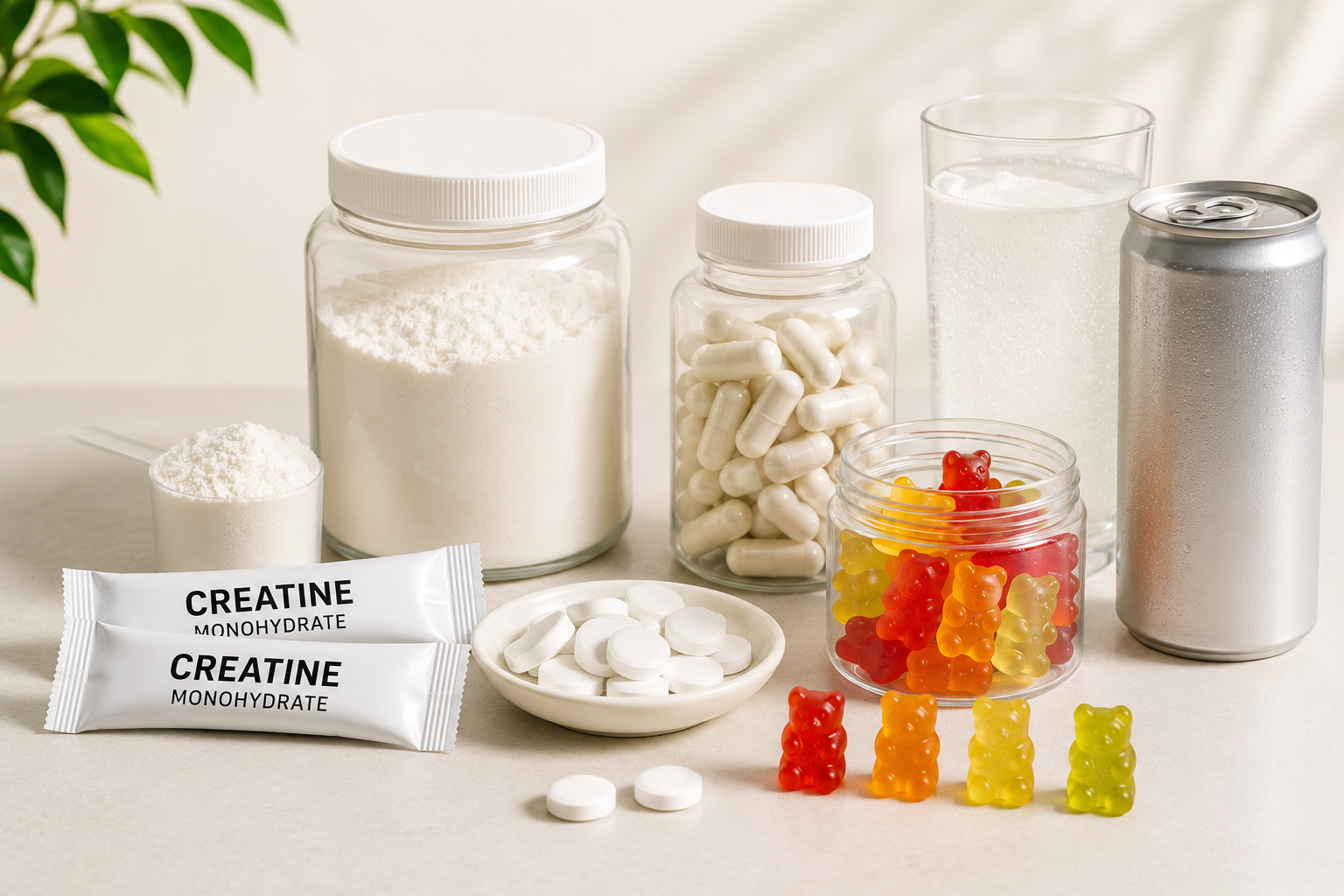
Creatine also works well in different delivery formats to suit varying consumer preferences:
- Powders
- Stick packs and sachets
- Capsules
- Tablets
- Gummies
- Ready-to-mix beverages
- Effervescent tablets
Offering multiple formats enables brands to target everyone from athletes and busy professionals to older adults seeking convenient daily supplementation.
Common Myths About Creatine
Myth 1: Creatine Is Only for Bodybuilders
While creatine has long been associated with strength sports, it is increasingly used by recreational exercisers, older adults, women, and individuals looking to maintain muscle health and support an active lifestyle.
Myth 2: Creatine Damages the Kidneys
Research consistently shows that creatine supplementation at recommended dosages is generally safe for healthy individuals. Those with pre-existing kidney disease should consult a healthcare professional before taking creatine.
Myth 3: You Must Complete a Loading Phase
A loading phase can increase muscle creatine stores more quickly, but it is not essential. Consuming 3–5 g of creatine monohydrate daily will also effectively increase muscle creatine levels over time.
Formulation Considerations for Supplement Brands
When developing a creatine-based supplement, brands should consider:
- Using high-quality creatine monohydrate with reliable purity and stability.
- Pairing creatine with complementary ingredients that match the product positioning, such as protein, collagen, electrolytes, magnesium, or B vitamins.
- Selecting an appropriate dosage format based on the target consumer. While powders remain the most common option, gummies and stick packs are gaining popularity for their convenience and portability.
- Ensuring good flavour, solubility, and overall consumer experience, particularly for powder-based products.
- Complying with local regulatory requirements regarding ingredient usage, dosage limits, and permitted claims.
A thoughtfully formulated creatine product can appeal to a much wider audience than traditional sports nutrition alone.
Final Thoughts
Creatine has evolved into one of the most versatile and scientifically supported ingredients in today’s supplement industry. Its benefits now extend beyond muscle performance to healthy aging, women’s wellness, recovery, and active living.
As consumer awareness continues to grow, creatine offers supplement brands an opportunity to create innovative products that address multiple health needs across diverse demographics.
Whether formulated as a powder, capsule, ready-to-drink beverage, or convenient gummy, creatine has become far more than a gym supplement—it is now a mainstream wellness ingredient backed by decades of scientific research.
Looking to develop a creatine-based supplement? Novaxis Health helps brands formulate science-backed, market-ready products, from ingredient sourcing and formulation to regulatory support and commercialization. Contact us to discover how creatine can strengthen your next product innovation.