


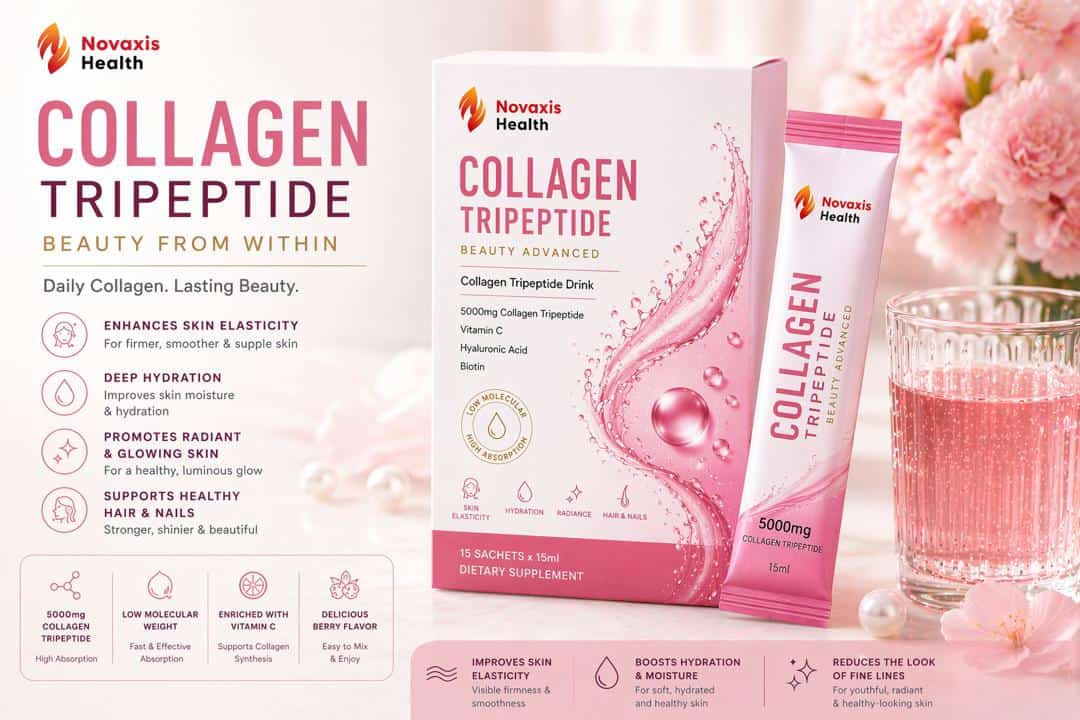
Collagen supplements have become a key category in Malaysia’s health and beauty market, widely associated with skin health, anti-aging, and overall wellness. As the market matures, consumers are looking beyond basic claims and focusing more on absorption, formulation quality, and scientific credibility.
Understanding how collagen works—particularly the role of peptides such as dipeptides and tripeptides—helps explain why some products are more effective than others.
What Happens to Collagen in the Body?
Collagen is naturally a large protein molecule that cannot be absorbed directly in its original form. To improve bioavailability, most supplements use hydrolyzed collagen, also known as collagen peptides.
Through hydrolysis, collagen is broken down into smaller amino acid chains, allowing it to be more easily digested and absorbed in the gastrointestinal tract. These smaller units can then be utilised by the body to support skin, joints, and connective tissues.
However, not all collagen peptides deliver the same level of effectiveness.
Dipeptides, Tripeptides, and Why They Matter
During hydrolysis, collagen is broken into peptides of varying lengths:
- Polypeptides – longer amino acid chains
- Tripeptides – three amino acids
- Dipeptides – two amino acids
Among these, dipeptides and tripeptides are considered more bioactive due to their smaller molecular size. They can be absorbed more efficiently through the intestinal wall and may enter the bloodstream intact.
Certain collagen tripeptides, such as Gly-Pro-Hyp, have been studied for their role in supporting collagen synthesis in the skin. These smaller peptides may help improve skin elasticity, hydration, and overall skin structure.
This is why many premium products highlight collagen tripeptide content as part of their formulation strategy.
Why Collagen Quality Varies
Many collagen products in the market are labelled simply as “collagen peptides” without specifying peptide size or composition. In such cases, the formulation may contain a wide range of peptide lengths, with a lower proportion of bioactive forms.
Higher-quality collagen products typically focus on:
- Controlled hydrolysis processes
- Higher proportion of low molecular weight peptides
- Standardised peptide profiles
- Consistent absorption characteristics
As a result, two products with similar collagen dosage may differ significantly in effectiveness depending on their peptide composition and quality.
The Role of Supporting Ingredients
Collagen is often combined with additional ingredients to enhance its function and overall benefits:
- Vitamin C supports natural collagen formation
- Hyaluronic acid helps maintain skin hydration
- Biotin contributes to hair and nail health
- Antioxidants help protect against environmental stress
These combinations are commonly found in collagen supplement Malaysia products designed to support both beauty and general wellness.
Popular Collagen Formats in Malaysia
The collagen category in Malaysia continues to evolve with a wide range of delivery formats:
- Collagen drinks for convenience and daily use
- Powder sachets for flexibility in consumption
- Capsules and tablets for simplicity
- Gummies for a more lifestyle-oriented approach
While format influences consumer preference, formulation quality remains the key factor in determining effectiveness.
Regulatory Considerations
In Malaysia, collagen products may fall under different regulatory categories depending on their format and formulation.
Capsules and tablets are regulated as health supplements, while powders, drinks, and gummies are often classified as food or functional products depending on the formulations or compositions. This classification affects how products are developed, labelled, and marketed.
Ensuring compliance with local regulations is essential for both product quality and consumer trust.
The Future of Collagen
As consumer awareness increases, the collagen market is moving toward more advanced and transparent formulations. There is growing interest in:
- Specific peptide profiles such as dipeptides and tripeptides
- Low molecular weight collagen for improved absorption
- Multi-functional formulations targeting skin, joints, and overall wellness
Collagen is evolving from a general beauty ingredient into a more refined, science-driven category.
A Note on Product Development
As interest in collagen continues to expand, there is also increasing focus on formulation quality, ingredient selection, and product positioning. Developing a well-designed collagen supplement involves more than ingredient selection—it requires a clear understanding of peptide profiles, format suitability, and regulatory pathways.
With the right expertise and approach, it is possible to create products that align with both market trends and evolving consumer expectations.