


Have you ever wondered why some days you feel full of energy while on others, even after a good night’s sleep, you still feel exhausted?
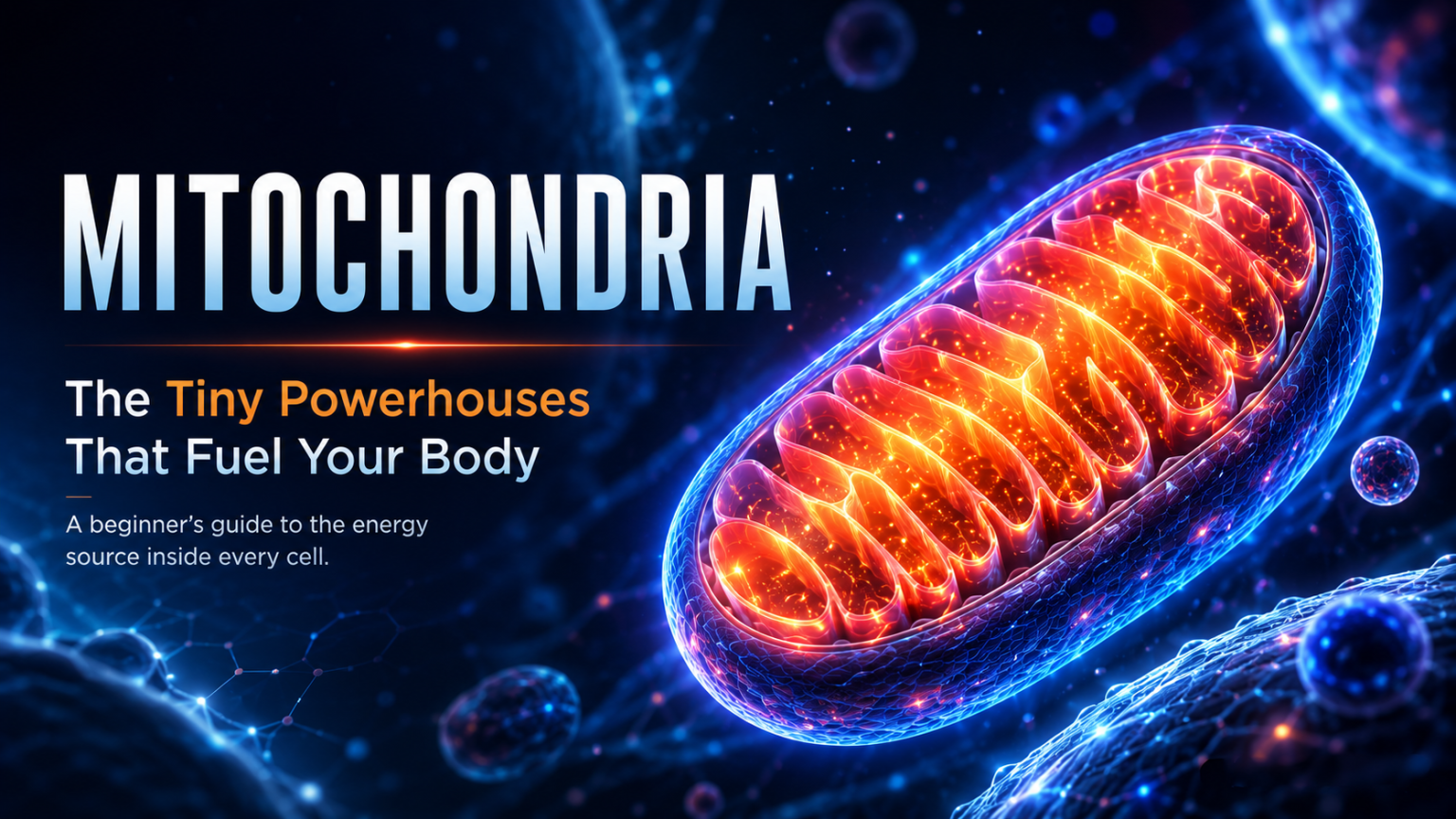
The answer may lie inside trillions of tiny structures hidden within your cells—mitochondria.
Although they are microscopic, mitochondria play an enormous role in keeping your body alive and functioning. Every heartbeat, every breath, every step you take, and even every thought you have depends on these incredible cellular powerhouses.
Scientists have been studying mitochondria for decades, and today they’re considered one of the most important areas in healthy aging, energy metabolism, and overall wellness.
Let’s explore what mitochondria are, why they’re so important, and how you can support them.
What Are Mitochondria?
Imagine every cell in your body is like a busy city.
Each city needs electricity to power homes, factories, hospitals, and transportation. Without electricity, nothing works.
In your cells, mitochondria are the power stations.
Their main job is to convert nutrients from the food you eat into usable energy that your body can immediately use.
This energy is stored as a molecule called ATP (adenosine triphosphate).
Think of ATP as the energy currency of your body.
Whenever your muscles contract, your heart beats, your brain thinks, or your immune system responds to an infection, ATP is being used.
Without healthy mitochondria, your cells simply cannot produce enough energy to function efficiently.
Where Are Mitochondria Found?
Almost every cell in your body contains mitochondria.
However, organs that require large amounts of energy contain far more mitochondria than others.
These include:
- Brain
- Heart
- Skeletal muscles
- Eyes
- Liver
- Kidneys
For example:
- Your heart beats over 100,000 times every day, requiring a constant supply of ATP.
- Your brain represents only about 2% of your body weight but uses around 20% of your body’s energy.
- Your eye’s retina is one of the most metabolically active tissues in the body, relying heavily on healthy mitochondria for vision.
This is why mitochondrial health is so important for overall well-being.
What Do Mitochondria Actually Do?
Most people know mitochondria produce energy.
But that’s only one of their many important jobs.
Produce Energy (ATP)
This is their best-known function.
Mitochondria convert carbohydrates, fats, and sometimes proteins into ATP through a highly efficient process known as cellular respiration.
Without ATP:
- Muscles cannot move
- The heart cannot beat
- Nerves cannot transmit signals
- Cells cannot repair themselves
Simply put, life depends on ATP.
Support Brain Function
Your brain is one of the body’s biggest energy consumers.
Healthy mitochondria help provide the constant energy needed for:
- Learning
- Memory
- Concentration
- Mental clarity
- Communication between brain cells
When energy production slows, people may notice mental fatigue or difficulty focusing.
Keep Your Heart Working
Unlike many muscles that get to rest, your heart works continuously throughout your life.
To maintain this nonstop activity, heart muscle cells are packed with mitochondria.
Healthy mitochondria help support:
- Normal heart muscle contraction
- Efficient energy production
- Healthy cardiovascular function
Power Your Muscles
Whether you’re climbing stairs, hiking, exercising, or simply standing up, your muscles rely heavily on ATP.
More active muscles often contain more mitochondria to meet increased energy demands.
That’s why athletes often develop greater mitochondrial capacity through regular training.
Help Cells Manage Oxidative Stress
As mitochondria produce energy, they naturally generate small amounts of reactive oxygen species (ROS).
In normal amounts, ROS are a natural part of cellular function.
However, when ROS accumulate excessively, they may contribute to oxidative stress, which can damage proteins, fats, and DNA.
Fortunately, mitochondria work together with the body’s antioxidant defense system—including nutrients such as vitamins C and E—to help maintain a healthy balance.
Regulate Cell Survival
Mitochondria also help determine when damaged or unhealthy cells should naturally be removed through a carefully controlled process.
This helps maintain healthy tissues by preventing damaged cells from accumulating.
Why Does Mitochondrial Health Matter?
As we age, mitochondria naturally become less efficient.
Lifestyle factors can also affect how well they work.
Examples include:
- Aging
- Poor diet
- Lack of physical activity
- Smoking
- Excessive alcohol intake
- Chronic stress
- Poor sleep
- Environmental pollution
When mitochondria become less efficient, cells produce less ATP while oxidative stress may increase.
This may contribute to:
- Feeling tired more easily
- Slower recovery after exercise
- Reduced physical endurance
- Mental fatigue
- Healthy aging challenges
This is one reason why supporting mitochondrial health has become an important focus in modern nutrition and wellness research.
Can We Increase the Number of Mitochondria?
Interestingly, yes.
Your body constantly adapts to your lifestyle.
When challenged in healthy ways, your cells can produce more mitochondria through a process called mitochondrial biogenesis.
Think of it like building more power stations to meet growing energy demands.
Some habits associated with healthy mitochondrial function include:
- Regular exercise
- Strength training
- Walking
- Balanced nutrition
- Adequate sleep
- Maintaining a healthy body weight
- Managing stress
Even moderate daily activity encourages your body to maintain healthier mitochondria.
Nutrients That Support Mitochondrial Health
Researchers continue to study nutrients that may help support normal mitochondrial function.
Some well-known examples include:
Coenzyme Q10 (CoQ10)
CoQ10 plays an important role in the mitochondrial electron transport chain—the process responsible for ATP production.
It also functions as an antioxidant within mitochondria.
Ergothioneine (EGT)
Often called the “longevity antioxidant,” ergothioneine is transported into cells by a specialized protein called OCTN1.
It tends to accumulate in organs exposed to high oxidative stress, including:
- Brain
- Eyes
- Liver
- Kidneys
Researchers believe it may help protect mitochondria from oxidative damage.
B Vitamins
B vitamins help convert carbohydrates, fats, and proteins into usable cellular energy.
Several B vitamins act as essential cofactors in energy metabolism.
Magnesium
Magnesium participates in hundreds of enzyme reactions, many of which are involved in ATP production.
Interestingly, ATP in the body is usually bound to magnesium before it can be efficiently used by cells.
Alpha-Lipoic Acid
Alpha-lipoic acid is a naturally occurring antioxidant involved in mitochondrial energy metabolism.
It also helps regenerate other antioxidants within the body.
L-Carnitine
L-carnitine helps transport fatty acids into mitochondria, where they can be converted into ATP.
This process is especially important in tissues with high energy demands, such as the heart and skeletal muscles.
Frequently Asked Questions (FAQ)
Can mitochondria be repaired?
Our bodies continuously repair, replace, and recycle mitochondria through natural quality-control processes. Healthy lifestyle habits can help support these processes.
Which organs have the most mitochondria?
The heart, brain, eyes, liver, kidneys, and skeletal muscles contain some of the highest numbers of mitochondria because they require large amounts of energy.
Why are mitochondria called the “powerhouse of the cell”?
Because they convert nutrients from food into ATP, the usable energy that powers nearly every cellular activity.
Does aging affect mitochondria?
Yes. Mitochondrial efficiency generally declines with age, which is one reason researchers are interested in nutritional and lifestyle strategies that support mitochondrial health.
What is ATP?
ATP (adenosine triphosphate) is often called the body’s “energy currency.” It provides the immediate energy needed for muscles, organs, nerves, and cells to function.
Conclusion
Mitochondria may be microscopic, but they play a massive role in your everyday health. From powering your heartbeat and muscles to supporting your brain and helping your cells function efficiently, these tiny structures are the energy source behind nearly everything your body does.
As we age and face daily stress, maintaining healthy mitochondria becomes increasingly important. Fortunately, simple lifestyle habits—such as staying physically active, eating a balanced diet, getting enough sleep, and managing stress—can help support mitochondrial health and overall well-being.
Understanding how mitochondria work is the first step toward appreciating the importance of cellular health. After all, when your cells have the energy they need, your body is better equipped to perform, recover, and thrive every day.